

JAPANESE ECONOMIC AND BUSINESS WEEKLY NEWSLETTER: 30 May -05 June,2026
The EU Japan Centre is releasing a weekly press review covering Japan's economic and business matters.
Outline
▶ Japan passes tougher foreign investment law, paving way for CFIUS-like panel
30 May, 2026
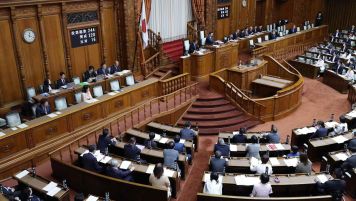
Photo Source:Ken Suzuki/Nikkei
Japan has revised its Foreign Exchange and Foreign Trade Act (FEFTA) to strengthen oversight of foreign investments that could affect national security. The changes establish a new interministerial review body, modeled on the U.S. foreign investment review system, and expand scrutiny to include indirect ownership structures and companies effectively controlled by foreign governments. The revised law also broadens reporting requirements for investments that may pose national security risks, even outside traditionally designated sectors such as critical infrastructure and advanced technology. The measures are intended to prevent the leakage of sensitive technologies and industrial know-how while providing the government with greater oversight of foreign investment activities.
Nikkei Asia:https://asia.nikkei.com/politics/japan-passes-tougher-foreign-investment-law-paving-way-for-cfius-like-panel
▶ Japan, Britain, Italy eye observer scheme for next-generation fighter
02 June, 2026
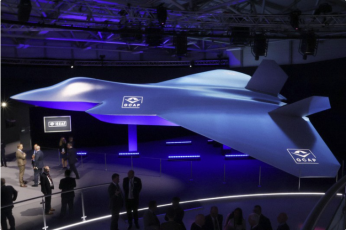
Photo Source: Kyodo
Japan, the UK, and Italy are planning to create an “observer” framework for countries interested in their jointly developed next-generation fighter jet under the Global Combat Air Program (GCAP). The system would allow selected countries to receive confidential updates on the project without formally joining development, with Canada expected to be the first observer. The aim is to boost future exports, attract partners, and reduce development costs while strengthening defense ties. Other countries such as Australia, India, and Sweden have also shown interest, while the aircraft is planned for deployment around 2035 as a replacement for Japan’s F-2 fighter.
Mainichi:https://mainichi.jp/english/articles/20260602/p2g/00m/0bu/008000c
▶ Japan Aims to Triple Battery Sales By 2035 Amid AI Boom, Focused on High-Output Sector
02 June, 2026

Photo Source: Yomiuri
Japan has revised its battery strategy and aims to triple global sales of its storage battery industry by 2035, driven by expected growth in AI, data centers, and robotics. The government sees strong opportunities in high-output batteries for data centers and backup power systems, where Japanese companies have a competitive advantage. In contrast, the EV battery market faces intense price competition from Chinese manufacturers and uncertainty due to changing EV policies in the U.S. and Europe. To strengthen the industry, Japan plans to expand support for domestic production, technology development, and international cooperation, while targeting full-scale commercialization of next-generation all-solid-state batteries around 2030.
Yomiuri:https://japannews.yomiuri.co.jp/business/economy/20260602-330512/
▶ Anthropic grants Japan, EU access to Mythos AI for security tests
03 June, 2026

Photo Source: Reuters
Japanese government institutions and financial organizations are among about 150 groups in over 15 countries granted access to Anthropic’s advanced AI model “Claude Mythos” for cybersecurity testing.
The model will be used to identify system vulnerabilities and strengthen defenses against cyberattacks, following strict security requirements. Japan’s Finance Minister welcomed the move as a chance to stay at the forefront of AI security preparation. The EU is also expected to receive access through its cybersecurity agency, reflecting growing international efforts to use frontier AI for defensive research while managing its potential risks to critical infrastructure.
Asahi:https://www.asahi.com/ajw/articles/16615145
▶ Japan Cabinet OKs 3 tril. yen extra budget to help tackle high energy costs
03 June, 2026
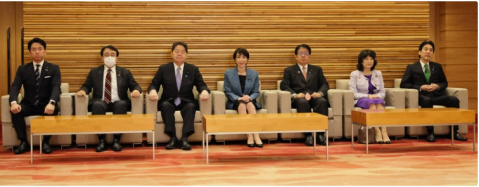
Photo Source: Mainichi
Japan’s cabinet has approved a 3.11 trillion yen supplementary budget to address rising energy costs, driven in part by instability in the Middle East. The budget, funded entirely by government bonds, includes subsidies to help reduce gasoline, electricity, and gas prices, as well as reserve funds to respond to further energy shocks. It also replenishes earlier subsidy programs for households and businesses.
While aimed at easing the burden of higher energy prices, the plan has raised concerns about Japan’s fiscal health, as it increases reliance on debt and coincides with rising government bond yields.
Mainichi:https://mainichi.jp/english/articles/20260603/p2g/00m/0na/022000c
▶ Japan to develop deep-sea drone in hunt for rare earths
03 June, 2026
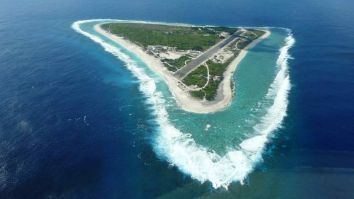
Photo Source: Japan Meteorological Agency
A Japanese marine research agency, JAMSTEC, plans to develop a more efficient hybrid autonomous underwater vehicle (AUV) by fiscal 2028 to support deep-sea surveys for rare-earth and other seabed resources. The new AUV will combine cruising and hovering capabilities, enabling faster and more flexible exploration, including reaching depths of around 6,000 meters more quickly. It will not collect samples but will improve the efficiency of resource surveys. The project is part of a long-term national program focused on economic security and stable resource supply, with involvement from government agencies and private firms. Japan aims to strengthen its deep-sea resource exploration capabilities amid competition from the U.S. and China.
Nikkei Asia:https://asia.nikkei.com/business/science/japan-to-develop-deep-sea-drone-in-hunt-for-rare-earths
▶ Japan's fertility rate at record low; 10th straight year of decline
03 June, 2026

Photo Source: Shogo Kodama/Nikkei
Japan’s fertility rate fell to a record low of 1.14 in 2025, marking the 10th consecutive annual decline. The number of births dropped to 671,236, the lowest since records began in 1899.
Although the pace of decline has slightly slowed, Japan continues to face a severe demographic downturn, with deaths far exceeding births for the 19th straight year, resulting in a natural population loss of about 918,000 people. Marriages increased slightly for a second year, but this has not offset the long-term trend of fewer births and later childbirth. Population forecasts show Japan is already approaching pessimistic low-fertility scenarios much earlier than expected.
▶ Seed-stage startup funding in Japan sinks 40% as investors grow selective
05 June, 2026
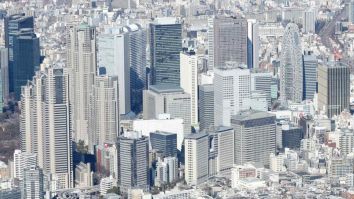
Photo Source: Rie Ishii/Nikkei
Japan's startup funding weakened in 2025, with seed-stage investment falling 42% to a 10-year low of ¥19.9 billion, significantly worse than the 14% decline in overall startup funding. The main reason is the Tokyo Stock Exchange's planned increase in Growth Market listing requirements from 2030, which is expected to reduce IPO opportunities. As a result, investors are becoming more selective and shifting funds toward more mature growth-stage companies. Higher interest rates, stricter IPO screening, and reduced venture capital resources have also contributed to the slowdown, raising concerns that reduced early-stage funding could hinder Japan's startup ecosystem.
--------------------------------------------------------------------------------------------------------------------------------------
2. Business News
▶ Japan firms embrace liquid cooling for AI data centers to save power
30 May, 2026

Photo Source: AP
Liquid cooling is rapidly gaining traction in Japan’s AI data center industry as rising GPU heat makes traditional air cooling less effective and more power-intensive. Cooling already accounts for a large share of data center electricity use, so improving efficiency has become increasingly important. Companies such as Fuji Electric, Nidec Corporation, and Mitsubishi Heavy Industries are developing liquid-cooling technologies that can significantly reduce energy consumption compared to air-based systems, despite higher upfront installation costs. The shift is part of a broader effort to improve efficiency and sustainability in AI infrastructure as demand for computing power continues to grow.
▶ SoftBank's Son looks to tackle AI's power problem with France data centers
02 June, 2026

Photo Source: Reuters
SoftBank Group plans to invest up to €75 billion in building large-scale AI data centers in France, taking advantage of the country’s abundant nuclear-powered electricity supply. The project, announced with French President Emmanuel Macron, will be SoftBank’s first AI infrastructure investment in Europe and aims to turn cheap, reliable power into “high-value intelligence” through AI computing. Initial capacity is planned at 3.1 GW, potentially expanding to 5 GW. The initiative reflects growing global competition in AI infrastructure and highlights SoftBank’s broader push into energy-linked data center development in the U.S. and other regions.
▶ Mazda starts biodiesel trial with Nippon Express to decarbonize logistics
02 June, 2026
Photo Source: Sae Kamae, Suzu Takahashi /Nikkei and Mazda Motor
Mazda has started a demonstration trial with Nippon Express using vehicle-hauling truck trailers powered by biodiesel fuel made partly from used cooking oil (HVO). The trial runs in western Japan and aims to evaluate fuel efficiency, emissions reduction, and operational performance through March 2027. The project is expected to cut CO2 emissions by about 40 tons during the test period and is part of a broader effort to decarbonize logistics while keeping internal combustion engines viable. Other companies, including Isuzu, Suzuki, and Toyota, are also advancing biofuels, hydrogen, and synthetic fuels as alternative energy solutions.
▶ Hitachi, Ricoh to build low-cost modular EV battery plants
03 June, 2026
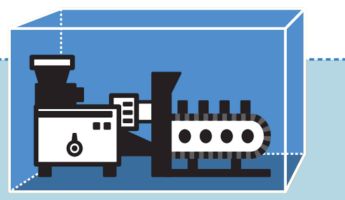
Illustration by Nikkei
Japanese battery-equipment suppliers have formed a joint venture, Swiftfab Energy Systems, to develop modular, containerized production systems for battery factories. The aim is to cut construction and equipment costs by about 70% and reduce build times from 4–6 years to 2–3 years. By standardizing and combining equipment into modular units, the initiative seeks to improve efficiency and help Japanese manufacturers compete with dominant Chinese battery producers. The first factory using this system is planned for around 2030.
▶ Joint venture to recover Japan's copper scrap to cut foreign dependence
04 June, 2026

Photo Source: Nikkei and Mitsubishi Materials
NTT and Mitsubishi Materials are launching a joint venture, NTT Circurust, to recover and recycle copper from used IT and telecommunications equipment in Japan. The company will initially process about 470,000 tons of NTT’s annual waste and later expand to external clients, aiming to reduce Japan’s dependence on imported copper. The business will also introduce a data platform to track the origin and processing history of recycled copper, improving transparency, environmental reporting, and supply chain ethics. This initiative responds to rising copper demand, supply risks, and Japan’s large untapped “urban mine” of recyclable metals, where current recycling rates remain relatively low.
Legal Disclaimer:
EIN Presswire provides this news content "as is" without warranty of any kind. We do not accept any responsibility or liability for the accuracy, content, images, videos, licenses, completeness, legality, or reliability of the information contained in this article. If you have any complaints or copyright issues related to this article, kindly contact the author above.
